Font Size:
![]()
Law Firms May Dodge Malpractice Bullet at Calif. High Court
The Recorder
September 06, 2007
Giving a client years more to sue a law firm for malpractice apparently didn't sound like such a swell idea to the California Supreme Court.
Not even if that client continues to be represented by one of the firm's former lawyers.
The idea got a cool reception Wednesday during oral arguments in a case that saw nine major law firms and two large county bar associations filing briefs as amici curiae to oppose the concept.
Justice Carol Corrigan seemed to sum up her colleagues' feelings by saying it was "clear to everyone" that once an attorney leaves a law firm and takes a client with him, the firm no longer has a continuing responsibility to that client. Once the relationship is severed, she indicated, the statute of limitations for filing a malpractice suit against the law firm begins to run.
Law firm partners, Corrigan added, shouldn't have to worry about which former client might sue for malpractice 15 years after leaving with former firm attorneys "Joe, Mary and Bill."
In the underlying case, Texas-based Beal Bank filed a $3.5 million malpractice suit against the now-defunct Arter & Hadden in late 2003, claiming the law firm acted negligently in a case in which it unsuccessfully tried to collect unpaid loans. The firm's former partners are still on the hook for the litigation.
Arter & Hadden, a Cleveland-based firm that folded in 2003, argued that Beal Bank had failed to file within the statutorily mandated limitations period. The firm pointed to Code of Civil Procedure §340.6, which requires a malpractice suit to be filed within one year of when a client should have discovered a lawyer's wrongful act or within four years of the date the act was committed, whichever comes first.
The firm conceded, however, that the clock stops ticking so long as the accused is still representing the client on the allegedly troubled matter.
Arter & Hadden and Beal Bank parted ways on Dec. 31, 1998.
As a result, Arter & Hadden argued, the one-year period for filing suit expired on Dec. 31, 1999, while the four-year period ended on Dec. 31, 2002 -- about a year before Beal Bank filed its suit.
Beal Bank responded, though, by arguing that the statute's continuous representation rule applied to Steven Gubner, a bankruptcy associate who left Arter & Hadden to open his own firm. Gubner continued to represent Beal Bank until Sept. 26, 2001, which the bank argued had extended its deadline until Sept. 26, 2005.
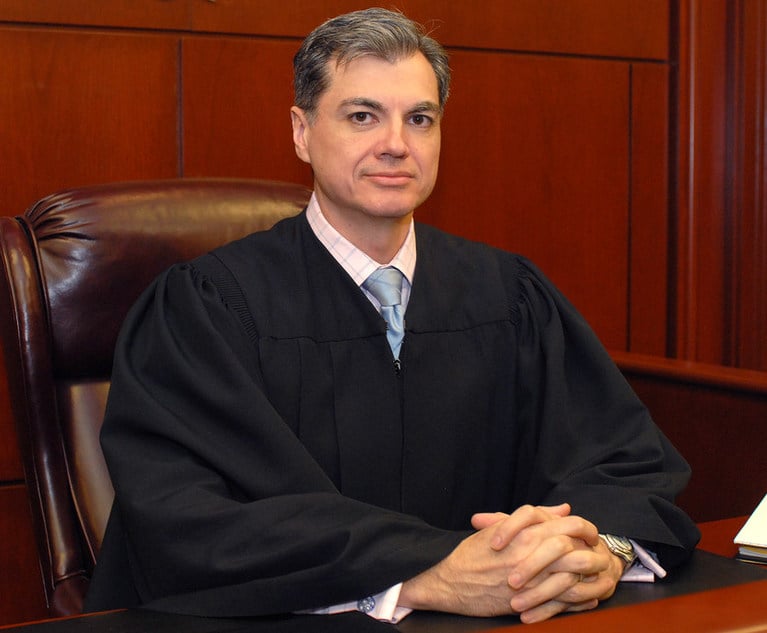
Los Angeles County Superior Court Judge John Shook concluded Beal Bank's suit was time-barred, but L.A.'s 2nd District Court of Appeal reversed and sided with the bank.
Sacramento's 3rd District and San Diego's 4th District had reached conflicting results in similar cases.
In Wednesday's case, the state Supreme Court's seven justices seemed to think the 2nd District got it wrong. That made it tough on David Rice, a partner in Carroll, Burdick & McDonough's Los Angeles office who argued the case for Beal Bank.
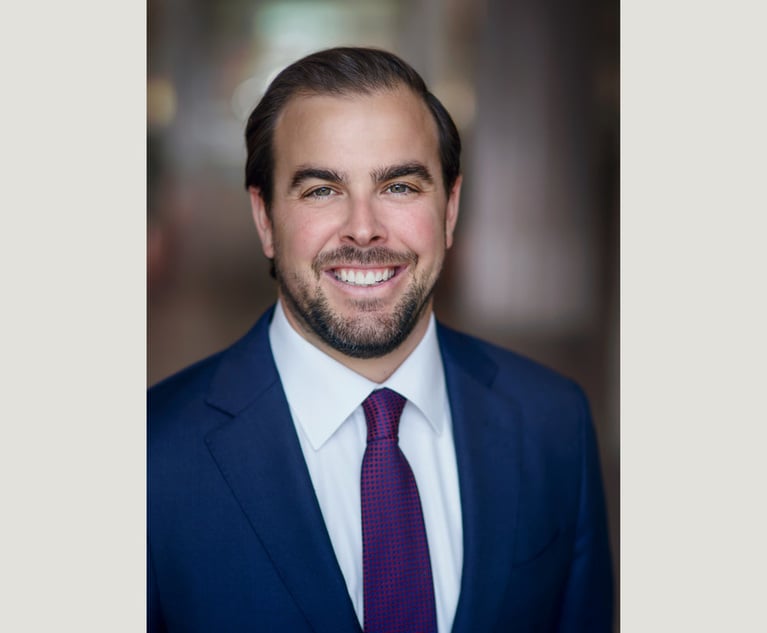
Rice, who manages his firm's appellate practice group, argued that the plain language of §340.6 made clear that "the fate of the law firm follows the fate of the individual attorney." He added that the bank's relationship with its individual attorney would have been harmed if the bank had been forced to sue his former firm during his representation.
Corrigan, who asked Rice the most difficult questions, said she thought the plain language of the statute was clear -- that the clock for the firm started ticking when it stopped representing Beal Bank.
She said it would make no sense to expose a law firm to malpractice when it had no direct dealings with a client for years. The firm had gotten no benefits from the client in all that time, she said, and had no control over the departed lawyer.
"Where's the logic," she asked Rice, "that says the law firm is still subject to liability?"
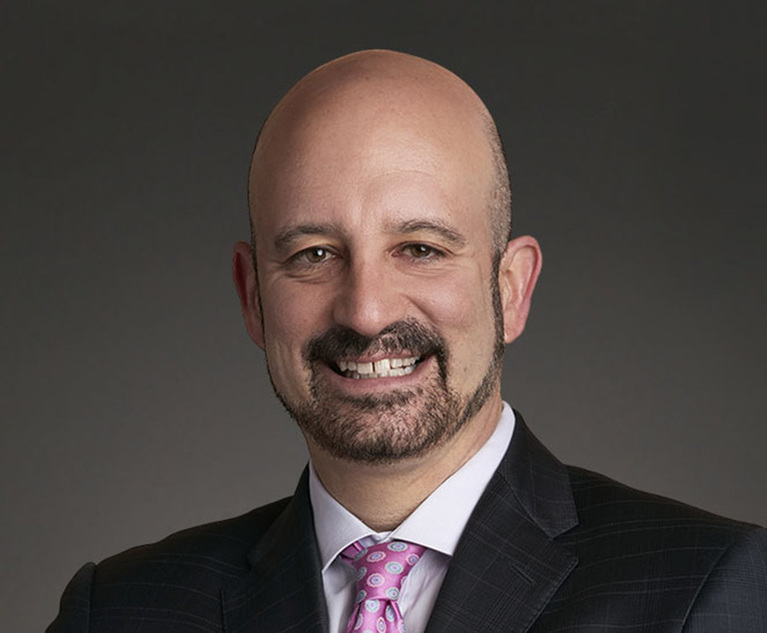
John Moscarino, a partner in L.A.'s Moscarino & Connolly who represented Arter & Hadden, and Elwood Lui, a partner in Jones Day's Los Angeles office who argued for the Los Angeles County and Orange County bar associations as amici, had a relatively easy time.
Moscarino argued in part that the 2nd District ruling, if upheld, would defeat two goals legislators had in mind when they enacted the tolling rule in 1977: to avoid disrupting the attorney-client relationship while the lawyer tries to correct a mistake, and to prevent lawyers from dragging out cases until statutory deadlines expire.
Moscarino said the statute was an attempt to strike a balance between the client's and lawyer's rights.
A ruling in Beal Bank SSB v. Arter & Hadden LLP, S141131, is due within 90 days.